

What OSFI Guideline E-23 means for institutions evaluating automated valuation models, property-data quality, independent review, and third-party model risk.
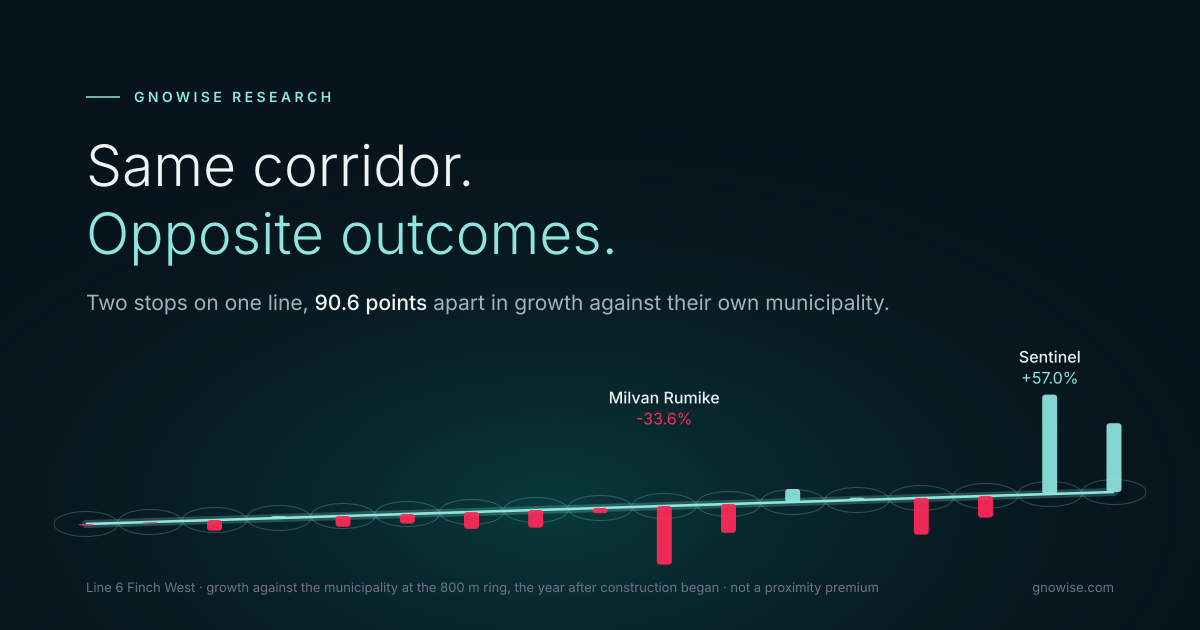
The transit premium, measured: what 69 Toronto station areas actually did
One · the measurement Three corridors, one question each. Line 5 was announced in March 2007 and construction began in July 2011, both of which we were able…

The Hidden Risk in Canada’s Rental Boom: Why Asking Rent Is No Longer Enough
Canada’s 2026 rental supply shift is exposing the gap between asking rents, effective income and lease-up assumptions. A practical framework for multifamily lenders, insurers and investors.

Transit-Oriented Development Is Not Just a Housing Strategy. It Is a Public Revenue Strategy.
How transit-oriented development may influence housing, assessment growth, and public revenue—and why fiscal analysis must separate observed receipts from scenarios.

AI in Property Valuation: Practical Opportunities and Professional Responsibilities
How AI-assisted valuation can support appraisers and institutional users while preserving professional judgment, validation, and model-governance responsibilities.

Scenario Analysis: Evaluating Renovation and Redevelopment Decisions
An illustrative renovation and redevelopment scenario-analysis workflow covering valuation inputs, cost assumptions, feasibility checks, and uncertain ROI outcomes.
Regulatory and model-risk resources
Explore our OSFI Guideline E-23: Model Risk Management overview, a plain-language reference for Canadian financial institutions considering model governance, property data and externally sourced models. For a focused discussion of valuation methods, read OSFI E-23 and Automated Valuation Models: Considerations for Canadian Lenders.